Any time we can bring science into the kitchen, I am a happy teacher. I loved science as a kid, and it led me to the science-heavy degree of Nutritional Sciences. I was happy in a lab performing experiments in which I truly did not know what would happen. The excitement! The possibility!
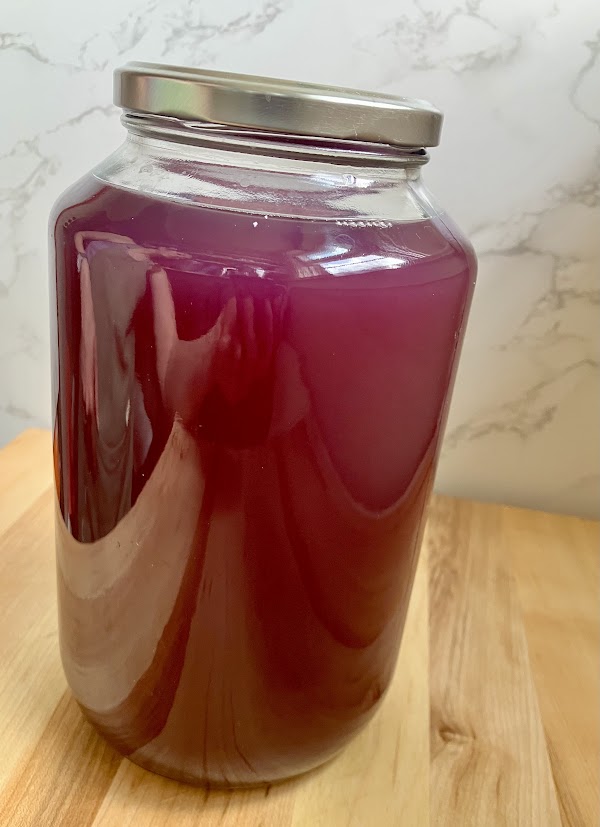
This recipe is a classic pH indicator experiment, with the fun twist that it is also delicious to eat! The pH scale measures how acidic or basic something is. Purple cabbage acts as a pH indicator because it has a high concentration of anthocyanin. This antioxidant changes it’s chemical structure when in an acidic (pH 1-6) and in a basic (pH 8-14) solution. When an acidic solution is added such as lemon juice, the cabbage water turns hot pink. When the cabbage water has a basic solution added such as water and baking soda, it turns blue. It’s fun to save some of the pasta boiling water when you’re through with it and test various food items around the kitchen and pantry.
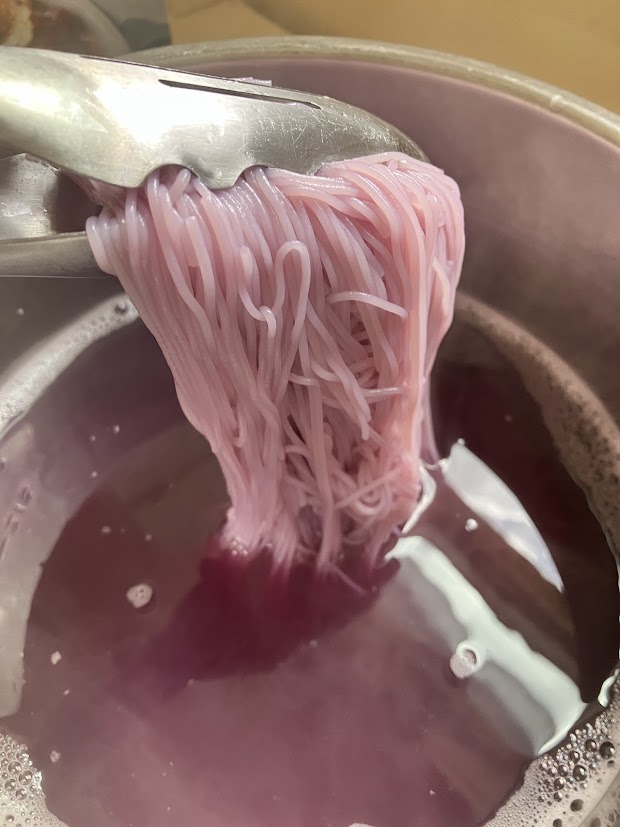
After you have boiled the noodles and made your sauce, it is so fun to hand your student a little wedge of lemon and let them go to town squeezing it over the noodles. It takes just a second, and then I often hear an audible gasp as the noodles go from light purple to hot pink right before their eyes. Chemistry!
Purple Color Changing Rainbow Noodles
Ingredients
½ head purple cabbage (can save the other half to slice thin for serving)
1 package thin rice noodles (the thin, vermicelli style work best, but any rice noodle will do)
2 Tablespoons butter
½ teaspoon garlic powder
¼ cup shredded parmesan cheese
1 lemon
1 red bell pepper (for serving)
1 carrot (for serving)
1 yellow squash (for serving)
½ cucumber (for serving)
1 teaspoon sesame seeds (optional, for serving)
Instructions
- Wash and chop purple cabbage into small pieces.*see notes
- Fill a large pot with 12 cups water and add cabbage. Bring to a boil.
- Boil cabbage for 20-30 minutes.
- Remove cabbage and discard.
- Cook noodles according to package instructions. Save ½ cup of the pasta water to make your sauce.
- Melt butter in a large heavy bottomed skillet and add garlic powder. Add cooked noodles, parmesan, and reserved pasta water. Cook on medium heat, tossing with tongs, until pasta water is absorbed and butter and cheese are melted.
- Slice your lemon and cucumber and serve on the side with your sesame seeds.
- Let your child know that if they squeeze the lemon juice over their noodles, something special will happen. The noodles should turn from purple to a bright pink.
Notes
- This is a great task for little hands. Make sure they have a child safe knife and they can have a great time chopping the cabbage into whatever shape they want. It doesn’t matter! If they are too young for a knife, try having them rip the cabbage into pieces. If the cabbage is too wilted to cut easily, try some well washed child scissors or kitchen shears.
- You can let the cabbage sit in the hot water for 30 minutes to an hour to deepen the color of your purple.
- Boiling the cabbage can be done a day or even two before. Simply put the cabbage water in the fridge until you are ready to heat it up and use it. I like this option, because then my kitchen doesn’t smell like cooked cabbage when we are making the noodles and trying to create a positive eating environment for kids. We need all the help we can get!
- The science: Purple cabbage is a pH indicator. This means that it will change color based on the pH of its environment. Lemon juice is acidic and has a pH of around 2 on a scale of 1-14.
- The topping options for these basic noodles are endless! Try shredded carrot, bean sprouts, edible flowers, sliced boiled egg, sliced green onions, or chopped peanuts for those over 4 year old. You can also add a scoop of peanut butter or soy sauce for a variation on noodle flavor.
 truefamilyfood