Weather has been warm and beautiful lately, and we have been enjoying outside lunches as much as possible these days. The easiest way to make this happen has been snack tray lunches.
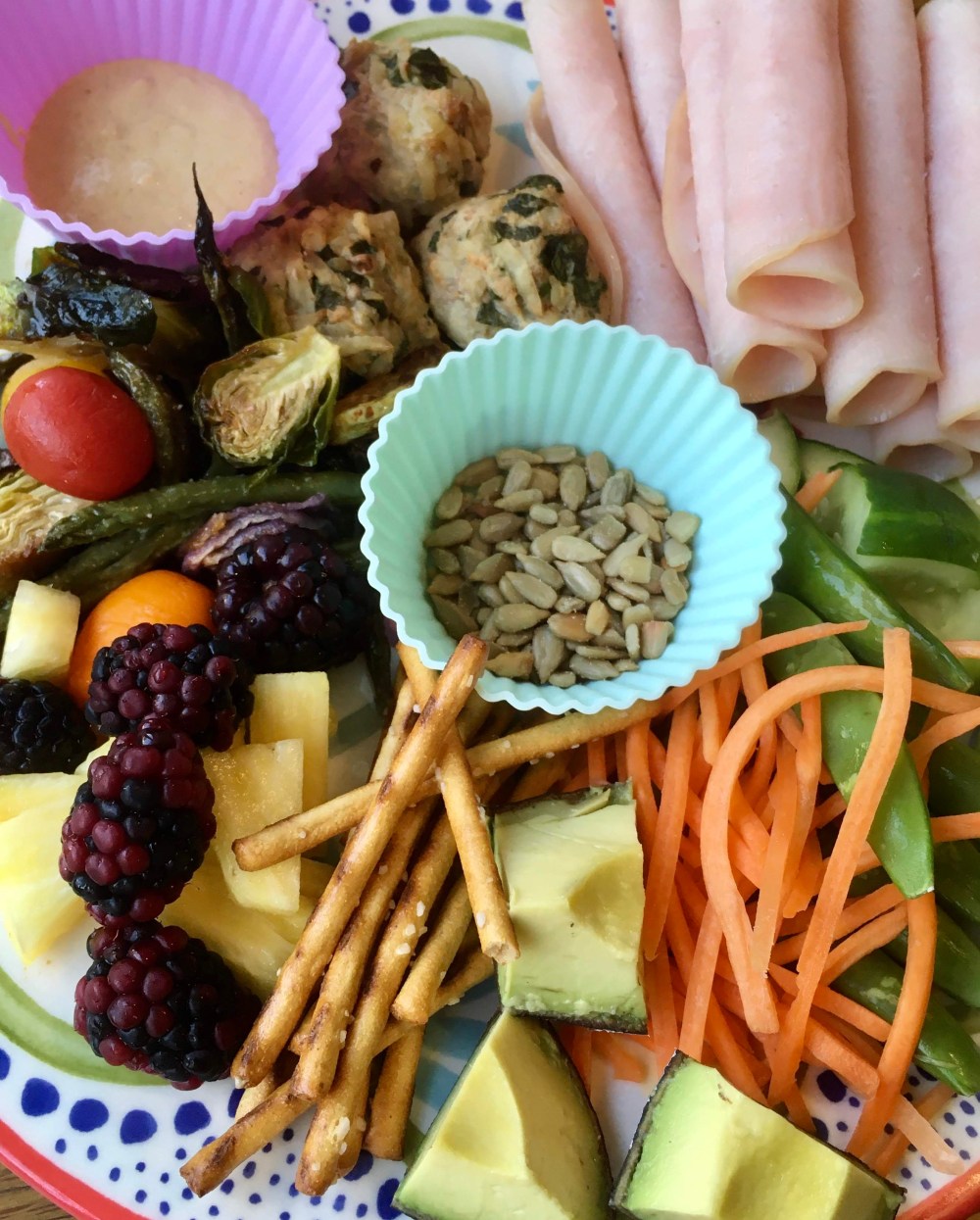
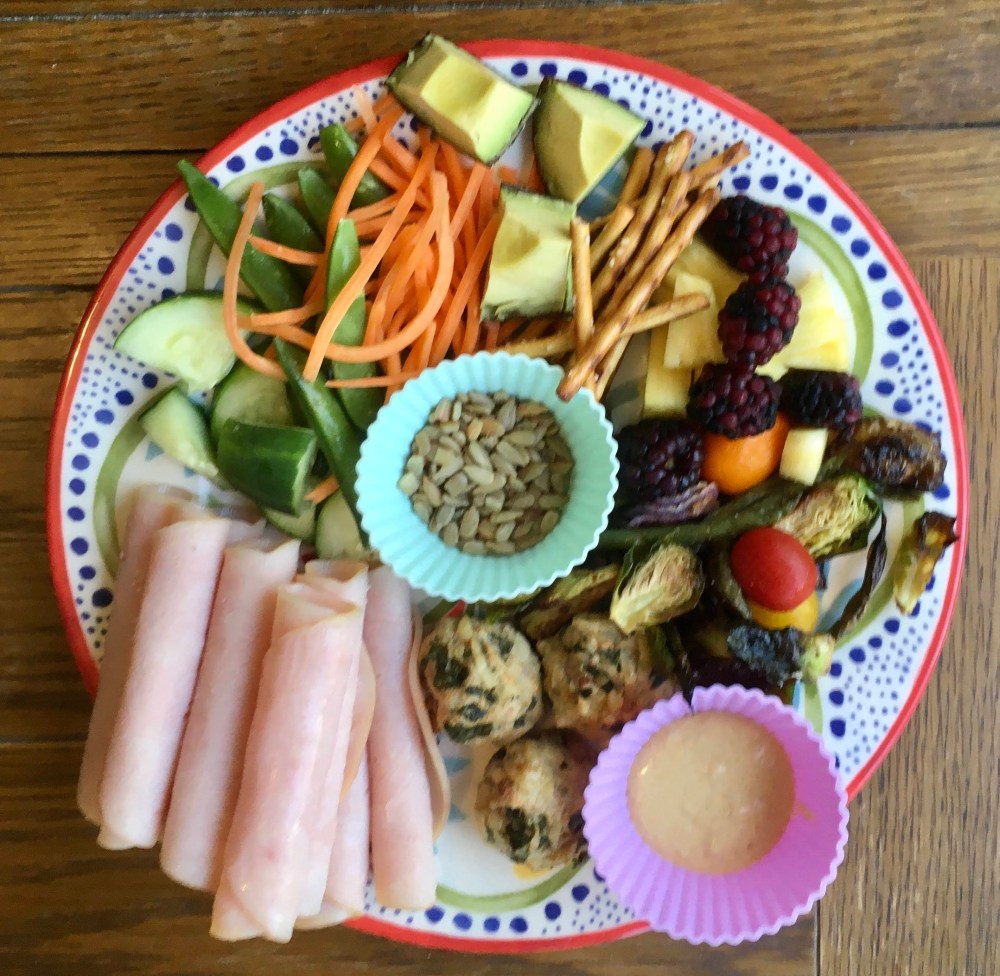
What is a snack tray lunch you ask? It’s where I pile all the leftovers and odds and ends from the fridge onto one big beautiful platter and let everyone go at it. I try to include a mix of leftovers, fresh foods, and pantry staples.
Reasons I am loving snack trays lately:
- it uses up odds and ends from the fridge
- it uses up leftovers from the fridge
- offers low-stakes opportunity for exposure of new foods
- the variety of color helps fuel appetite
- gives autonomy to kids in regards to feeding
- it’s incredibly easy
- easy to transport
- it’s fun!
Using Up Odds and Ends
I love being able to throw all the almost-empty food items onto a snack tray just to get rid of the last few olives, pretzels, or pieces of dried mango that have hung around for far too long. If there’s not quite enough for a full serving for everyone, but enough for a few people to snack on, perfect! Throw them in.
Using Up Leftovers
This is the perfect place to use up leftover bits and pieces from dinners. Roasted veggies, the last chicken thigh cut into pieces, a leftover meatball or two, smidgen of yummy sauce, all great additions to a snack platter. Reducing food waste has been especially on my mind lately with the COVID-19 spread hitting Houston. We are trying to make it as long as possible between grocery store trips.
Low-Stakes Exposure
Any time a child sees a food item in the grocery store or on the dinner table, whether or not they eat it or even put it on their plate, that is considered an “exposure”. Food neophobia in children peaks around the age of two, and that is usually when parents start to say their children are “picky”. This is developmentally normal. However, any exposure helps a food to seem more “normal” and less scary. To make these exposures even less scary, pair them with foods you know they’ll love. When there are plenty of other options on the platter, there’s no pressure to eat them, and they will seem less intimidating. This is the time to throw in kale chips, leftover roasted Brussels sprouts, or whatever else you feel like might be a tough sell to your child.
Variety of Color
Having several colors of food on the same plate has been shown to increase appetite.
Autonomy
This style of eating is the definition of family style. Everyone gets to pick what they want and leave the rest. This gives children a sense of control over what they are eating, even if they are just choosing from foods you already chose for them.
Easy to Make
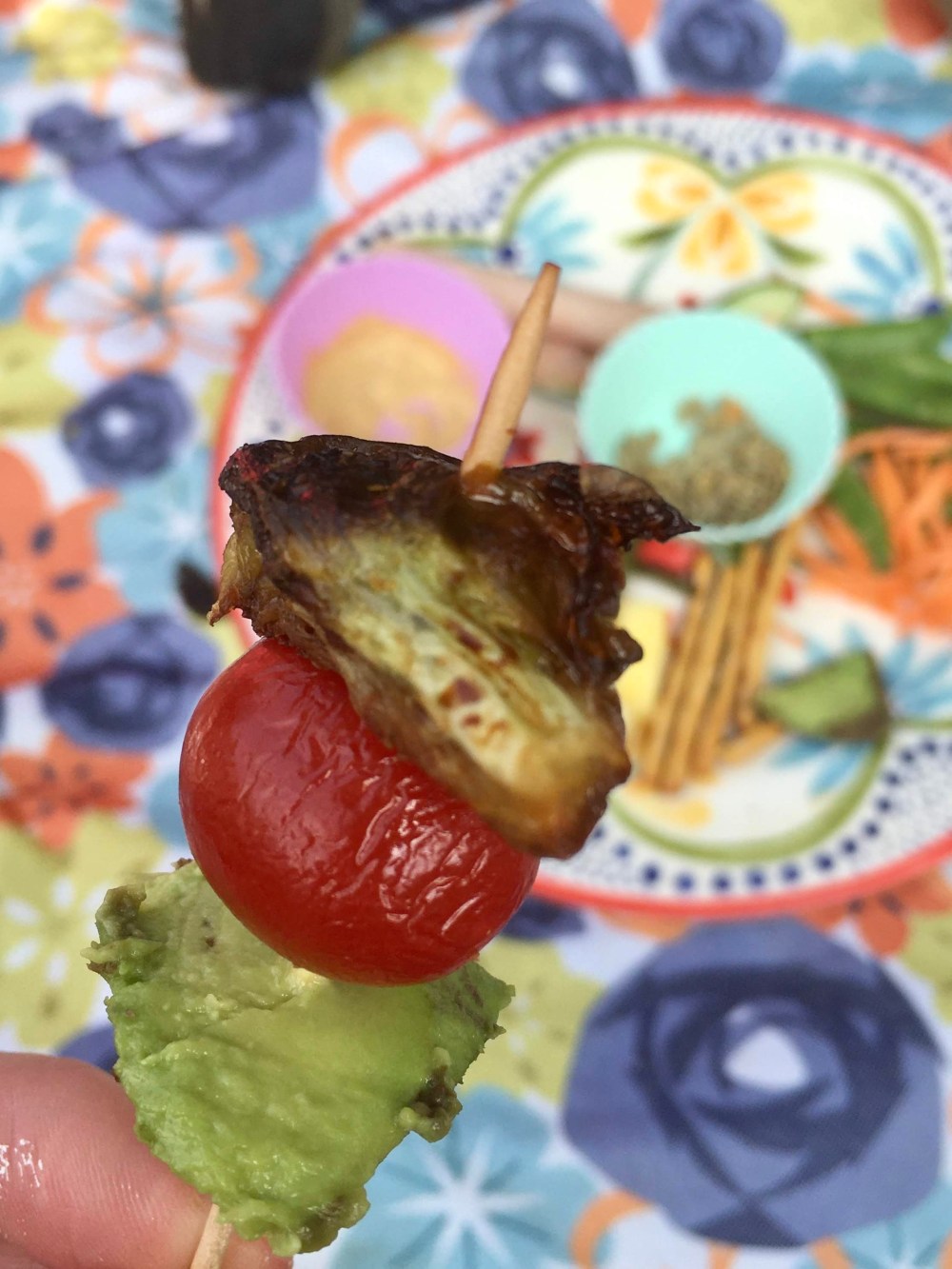
The platter shown took me less than 10 minutes start to finish. It requires no prep.
Easy to Transport
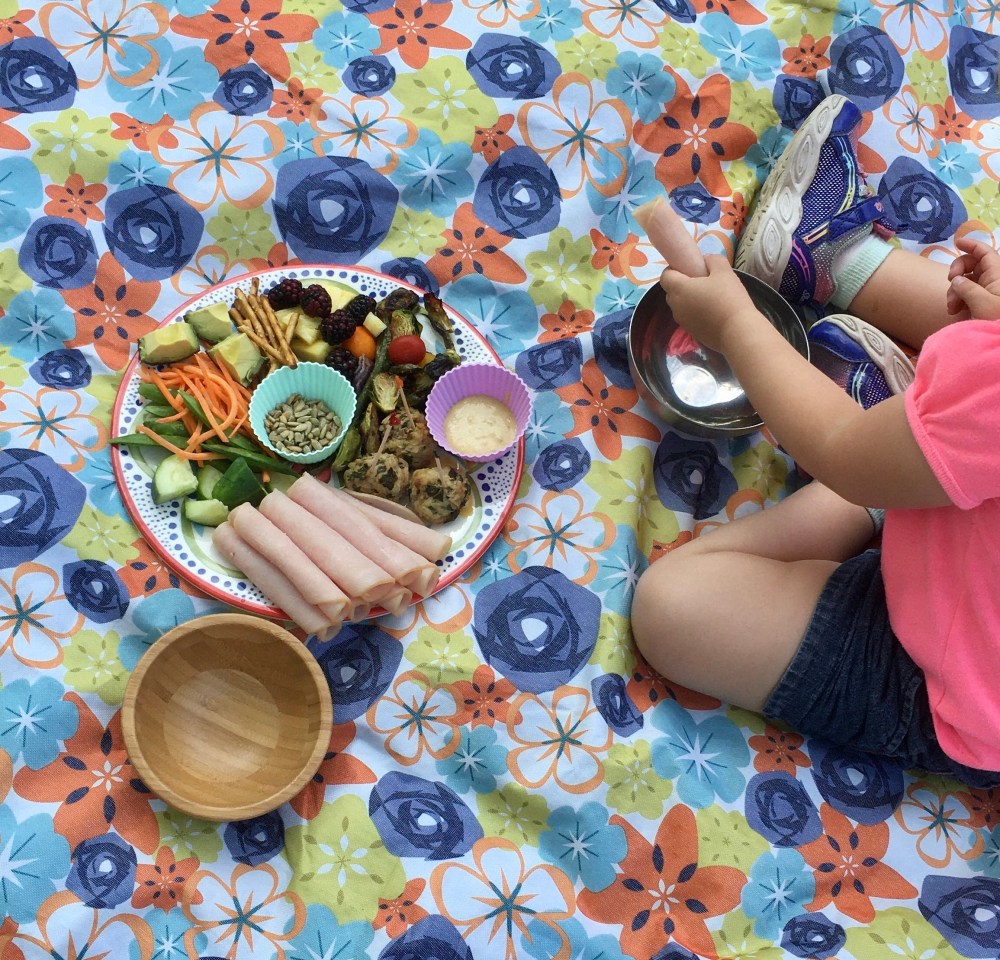
Share platters can be taken out to the backyard, like we have been doing, taken to the park, or taken on a family outing.
They’re Fun
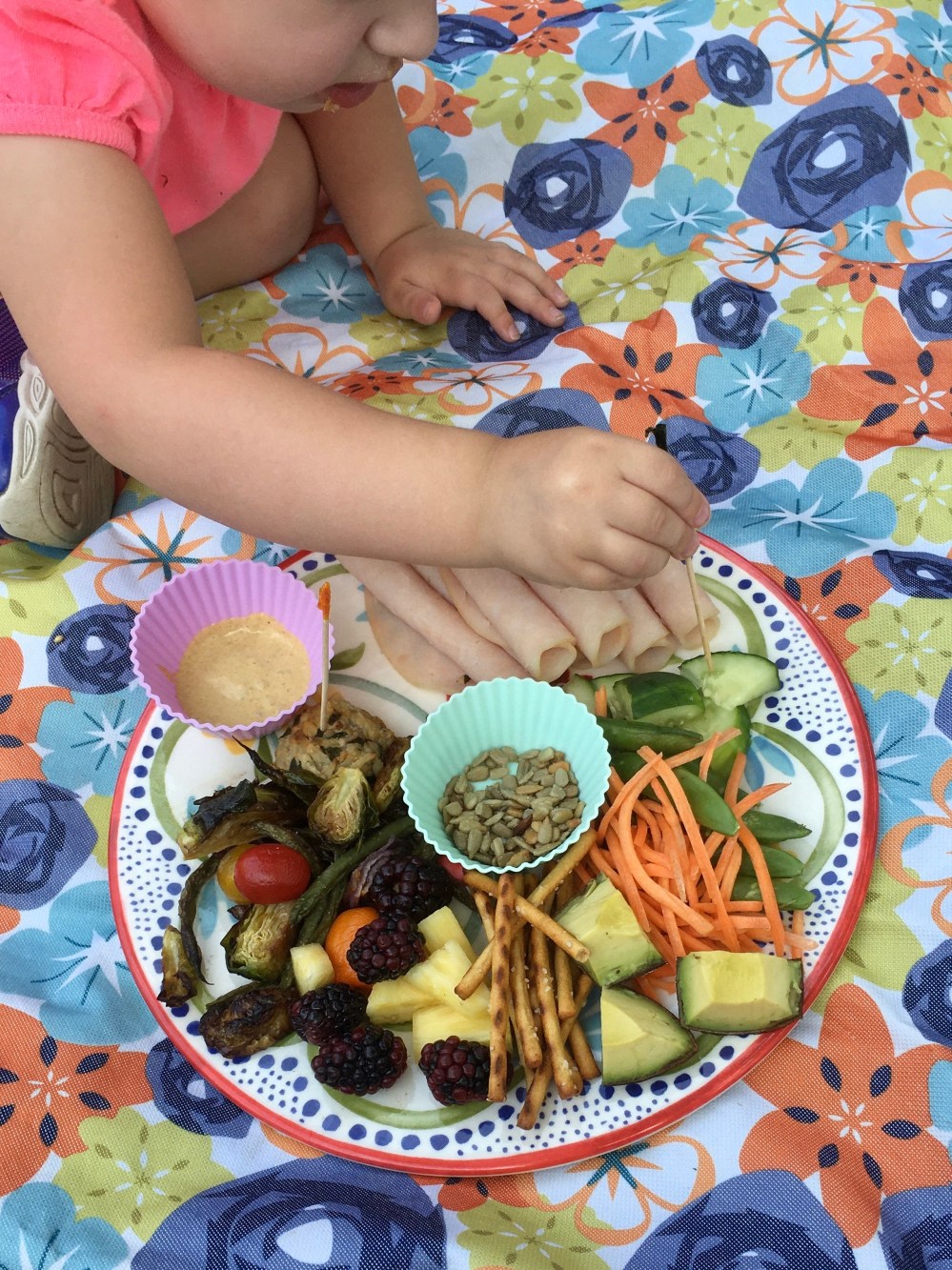
Share trays have been a great way to shake things up lately. We get into lunch ruts, so when I just can’t think of anything, I throw everything onto a platter and call it a day. We often serve them with “party” toothpicks that have fun colors or designs so that each person gets there own toothpick to select foods with.
 truefamilyfood